

INVESTOR EDUCATION
Learn the Business Behind the Deal
Real estate investing involves more than finding properties. Understanding how property research, leads, contracts, funding, closing, disposition, due diligence, and business systems work together can help investors make better-informed decisions.
The Investor-Friendly Network provides practical educational content designed to help real estate investors and wholesalers better understand the concepts, terminology, and processes they may encounter throughout the investing journey.
Learn the process. Ask better questions. Make more informed decisions.

The Mindset of a Real Estate Wholesaler: What Beginners Need to Understand
Real estate wholesaling isn't just about finding deals and collecting assignment fees. Learn the mindset new wholesalers need to handle rejection, stay consistent, protect their reputation, walk away from bad deals, and build a real investing business.
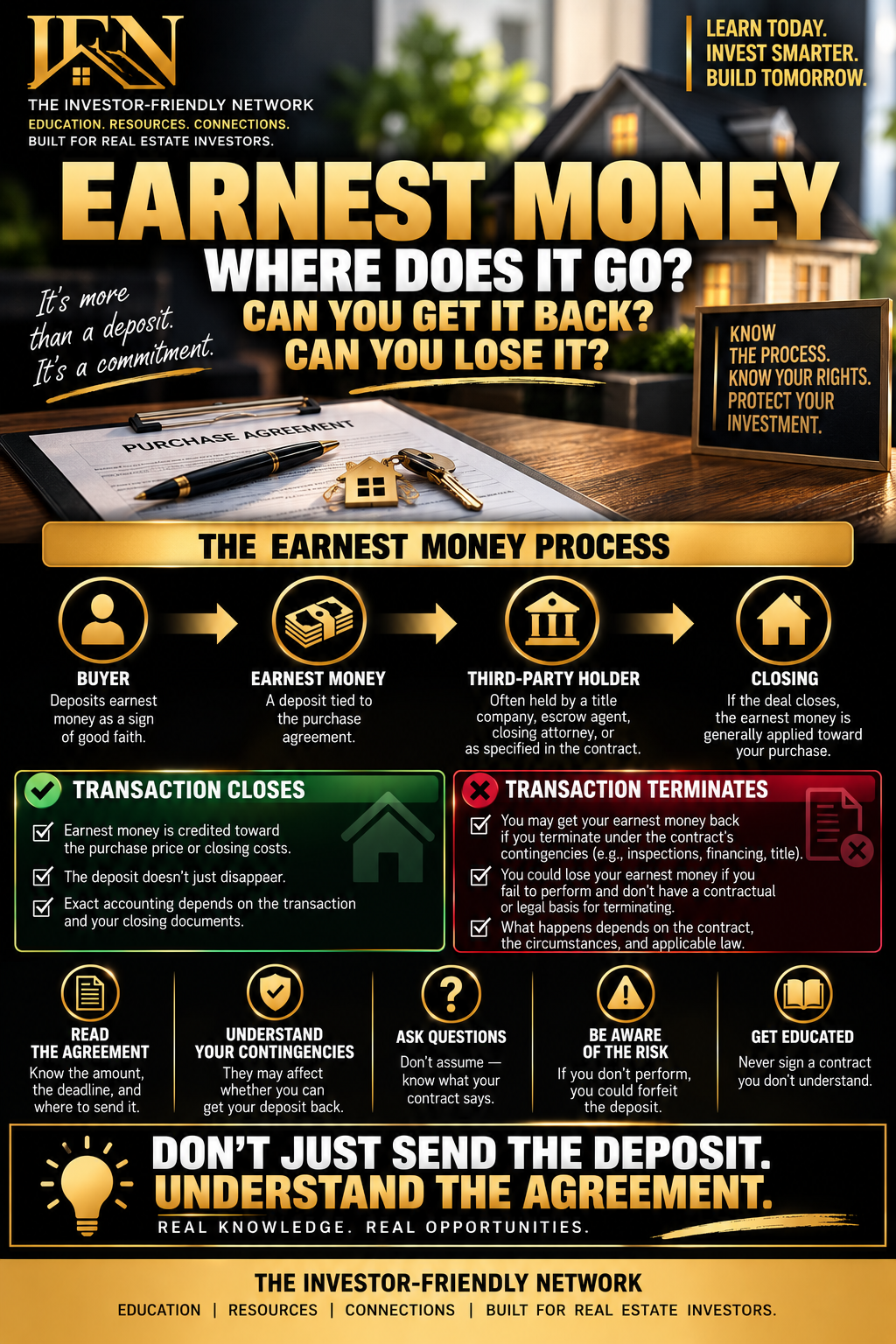
What Is Earnest Money in Real Estate—and Can You Lose It?
What happens to the earnest money you put down on a real estate deal? Learn what earnest money is, who may hold it, what happens at closing, when it may be returned, and why investors should understand their contract before sending a deposit.

What Is a Joint Venture (JV) in Real Estate Wholesaling?
Someone says they want to “JV your deal”—but what does that actually mean? Learn how joint ventures can work in real estate wholesaling, what each investor may contribute, how compensation may be divided, and why the agreement should be clear before anyone starts working the deal.

Is Real Estate Wholesaling Legal? What Investors Should Understand
Is real estate wholesaling legal? The answer isn't as simple as yes or no. Wholesaling laws, licensing requirements, disclosures and marketing rules can vary by state. Here's what new investors should understand before entering a wholesale transaction.

Do You Need Money to Start Wholesaling Real Estate?
You've probably heard that you can start wholesaling real estate with no money. But what does that really mean? Learn why wholesaling may require less capital than other real estate strategies—and what expenses new investors should still be prepared for.
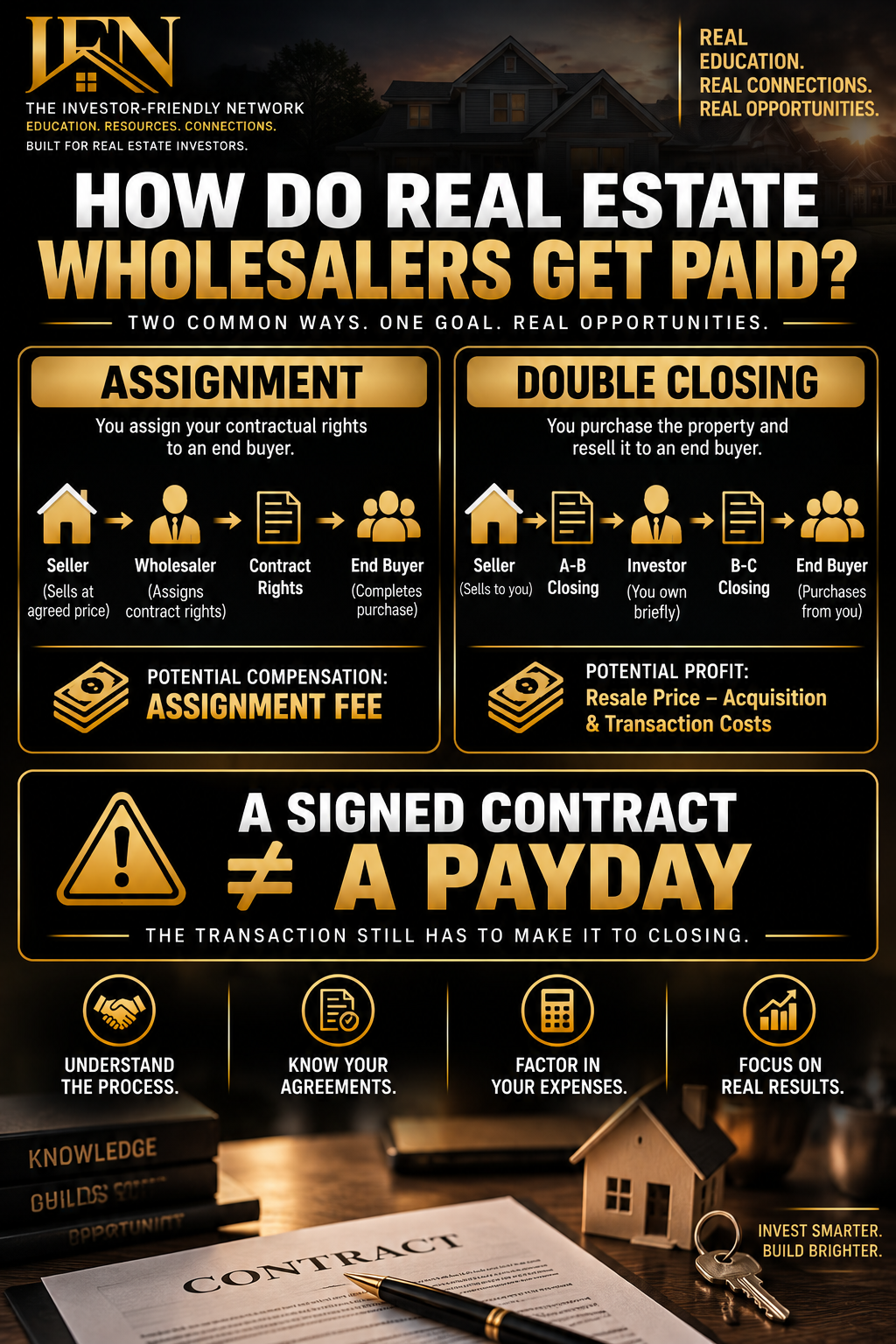
How Do Real Estate Wholesalers Get Paid?
How does a real estate wholesaler actually make money? Learn what an assignment fee is, how a wholesaler may get paid through an assignment or double closing, when payment typically occurs, and why getting a property under contract doesn't automatically mean you've made money.

How Do Real Estate Investors Find Cash Buyers?
Finding a potential deal is only part of the equation. For wholesalers and other real estate investors, building relationships with qualified cash buyers can be an important part of moving opportunities toward closing. Here are several places investors commonly look for buyers—and why building the right list matters more than building the biggest one.

What Is a Distressed Property—and Why Do Real Estate Investors Look for Them?
A distressed property isn't simply a house that needs repairs. Learn what property distress can mean, the situations that may contribute to it, why investors look for distressed properties, and the risks and responsibilities investors should understand before pursuing an opportunity.

What Is Proof of Funds in Real Estate Investing?
Proof of funds can play an important role when real estate investors submit offers, purchase properties with cash, or use certain funding sources. Learn what proof of funds means, what it may contain, how it differs from preapproval, and what investors should verify before using it.

What Makes a Title Company or Attorney Investor-Friendly?
Not every real estate closing looks the same. Learn what investors mean by an “investor-friendly” title company or closing attorney, what questions to ask before choosing a closing professional, and why experience with investor transactions can matter.
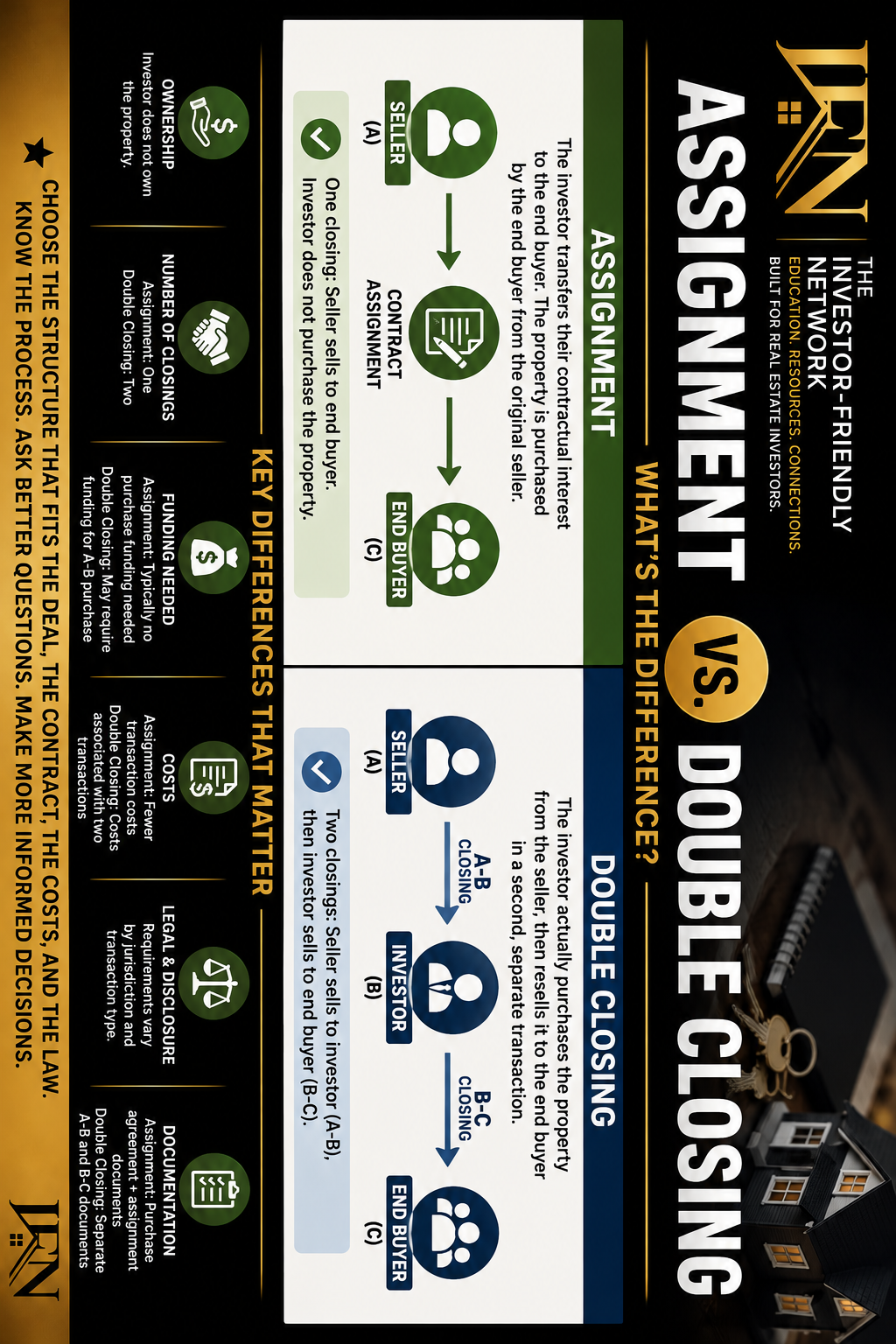
Assignment vs. Double Closing: What's the Difference?
Real estate wholesalers may encounter two different ways of completing a transaction: assigning a purchase contract or completing a double closing. Learn how each approach works, the key differences, potential costs, funding considerations, and questions investors should ask before choosing a transaction structure.
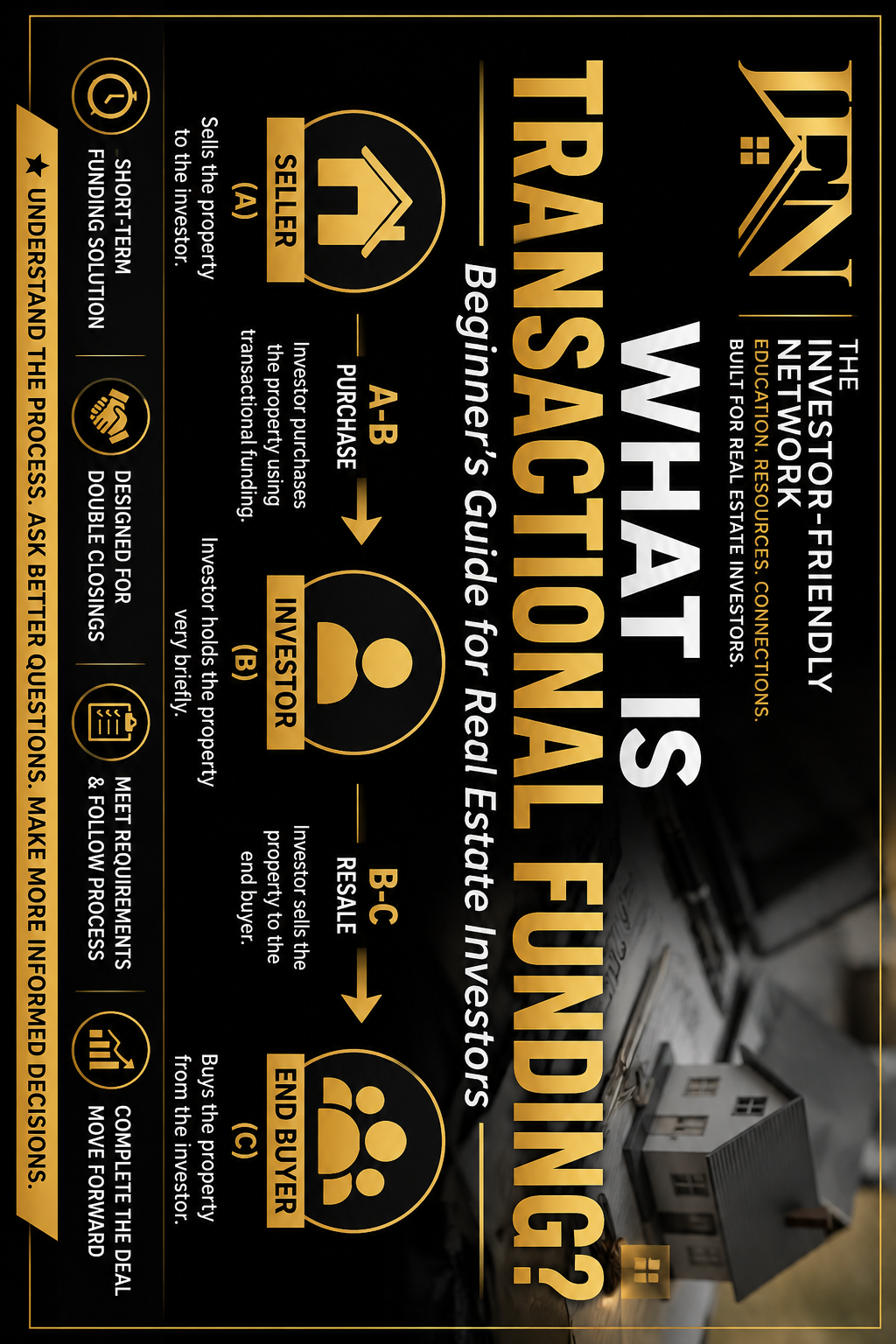
What Is Transactional Funding? A Beginner's Guide for Real Estate Investors
Transactional funding can help real estate investors complete certain short-term transactions, particularly double closings. Learn how it works, what A-B and B-C transactions mean, what investors should consider, and how transactional funding differs from traditional investment financing.

“Welcome to The Investor-Friendly Network: Education, Resources & Connections for Real Estate Investors.”
Welcome to The Investor-Friendly Network—a resource created to help real estate investors and wholesalers better understand the investing process, explore useful resources, and connect with solutions for funding, closing, disposition, property research, and business growth.